Learn how the Lightning Network enables fast, low-cost bitcoin transactions and what it means for everyday payments.
The Lightning Network is an advanced technology built on top of Bitcoin, serving as a second layer. Introduced in 2016 by Joseph Poon and Thaddeus Dryja, it aims to resolve some inherent issues of the Bitcoin blockchain. In short, the Lightning Network allows users to make transactions off-chain without the need for block confirmation on the blockchain.
Why the Lightning Network?
To understand the necessity of the Lightning Network, it's crucial to know how Bitcoin transactions work. While building and broadcasting transactions is relatively quick, the time-consuming part is the transaction confirmation process. A standard consumer computer can process around 14,000 transactions per second. However, each Bitcoin block, capable of containing approximately 2,000 transactions, is validated roughly every ten minutes. Therefore, processing 14,000 transactions would take about an hour and ten minutes.
This confirmation process is vital because it ensures the integrity and security of transactions, eliminating the need for third-party intermediaries. This verification allows people to trust that the transactions are accurate and legitimate. Shortly put: Bitcoin is a decentralised with an immutable ledger system, which come at a cost.
Challenge of scaling
As Bitcoin adoption grows, more transactions are submitted for verification in the Mempool, leading to higher transaction fees. This increase in fees makes small payments less attractive and practical.
To address these challenges and facilitate faster and cheaper transactions, the Lightning Network was developed as a solution. By creating a second layer on top of the Bitcoin blockchain, the Lightning Network allows for quicker transaction processing without compromising security, making it an essential advancement in the cryptocurrency space.
How the Lightning Network Works
To grasp the functionality of the Lightning Network, we need to explore the process of opening a payment channel, transacting within the channel, and routing payments through the network.
Opening a Channel
Opening a payment channel between two parties, such as Alice and Bob, is the foundational step in using the Lightning Network. This involves creating a funding transaction on the Bitcoin blockchain, locking a specified amount of Bitcoin into a multi-signature wallet controlled by both parties. Once confirmed, the initial state of the channel reflects the allocation of funds, enabling transactions within the channel. For example, if Alice deposits 1 BTC into the channel, the initial state shows Alice with 1 BTC and Bob with 0 BTC. This setup enables them to begin transacting within the channel.
Transacting Within the Channel
With the channel open, Alice and Bob can perform numerous off-chain transactions quickly and with minimal fees. Each transaction updates the channel's state. For example, if Alice sends 0.1 BTC to Bob, the new state shows Alice with 0.9 BTC and Bob with 0.1 BTC. Cryptographic techniques and revocation keys secure these updates, preventing fraud.
Keeping the Channel Open
Channels can remain open indefinitely, allowing unlimited transactions over time without the need to frequently close and reopen them, saving on fees and improving transaction speed.
Settling Transactions
Alice and Bob can settle their balances at any time by agreeing on the final state and broadcasting it to the Bitcoin blockchain. They might choose to keep the channel open for future transactions, settling on-chain only when necessary.
Routing Payments
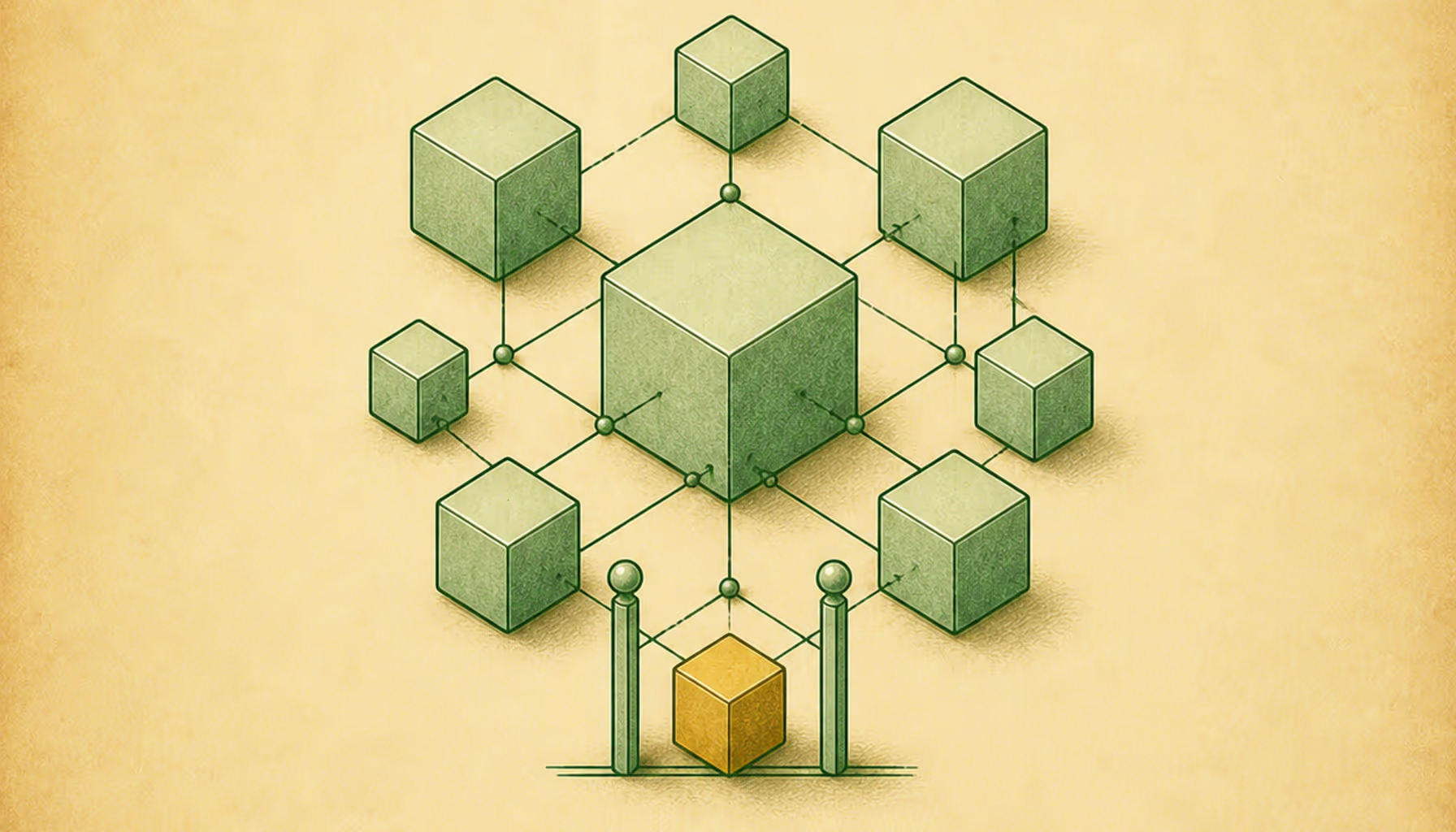
The Lightning Network consists of interconnected payment channels, forming a robust network. Payments can be routed through multiple nodes if a direct channel does not exist. For instance, Alice can send payments to Charlie through Bob if Bob has a channel with Charlie. Atomic Multi-Path Payments (AMP) ensure that payments are either fully completed or not at all, preventing partial payments or loss of funds.
Concerns About the Lightning Network
Centralisation
The Lightning Network, aimed at improving Bitcoin's scalability and speed, may lead to centralisation of transaction distribution. If a few large nodes, often run by well-funded entities, control much of the network's liquidity, they become the main transaction routes due to their reliability. This can marginalise smaller nodes, reducing decentralisation. High costs and technical expertise needed for large nodes further exacerbate this issue, creating barriers for smaller players. This concentration of power risks undermining Bitcoin's decentralised nature, making the network vulnerable to censorship, manipulation, and single points of failure.
Fraudulent Channel Closures
The Lightning Network speeds up Bitcoin transactions and cuts costs, but it has risks, including fraudulent channel closures. This happens when someone tries to close a payment channel using an outdated balance that favours them.
For example, if Alice and Bob have a channel and update their balances over time, Alice could cheat by broadcasting an old balance that gives her more Bitcoin than she currently has, effectively stealing from Bob.
The Lightning Network has built-in safeguards to prevent this:
- Time-locks: When a channel is closed, there's a waiting period allowing the other party to contest if they spot fraud.
- Revocation Keys: Each update invalidates the previous state with a key. If someone tries to use an old state, the other party can use the key to reclaim funds.
How to Access the Lightning Network
To use the Lightning Network, set up a Lightning wallet (mobile, desktop, or hardware), and fund it with Bitcoin from your regular wallet. Open a payment channel by committing Bitcoin. Once the channel is established, you can conduct transactions within the network. The wallet will automatically route payments if you don't have a direct channel with the recipient.
The Lightning Network enhances Bitcoin's scalability and transaction efficiency through off-chain transactions. It offers benefits like faster and cheaper transactions but also poses challenges such as potential centralisation and fraudulent channel closures. Understanding how to use and safeguard the network helps maximise its advantages and mitigate risks, contributing to a more robust and decentralised Bitcoin ecosystem.