What is Bitcoin? A beginner’s guide to how it works
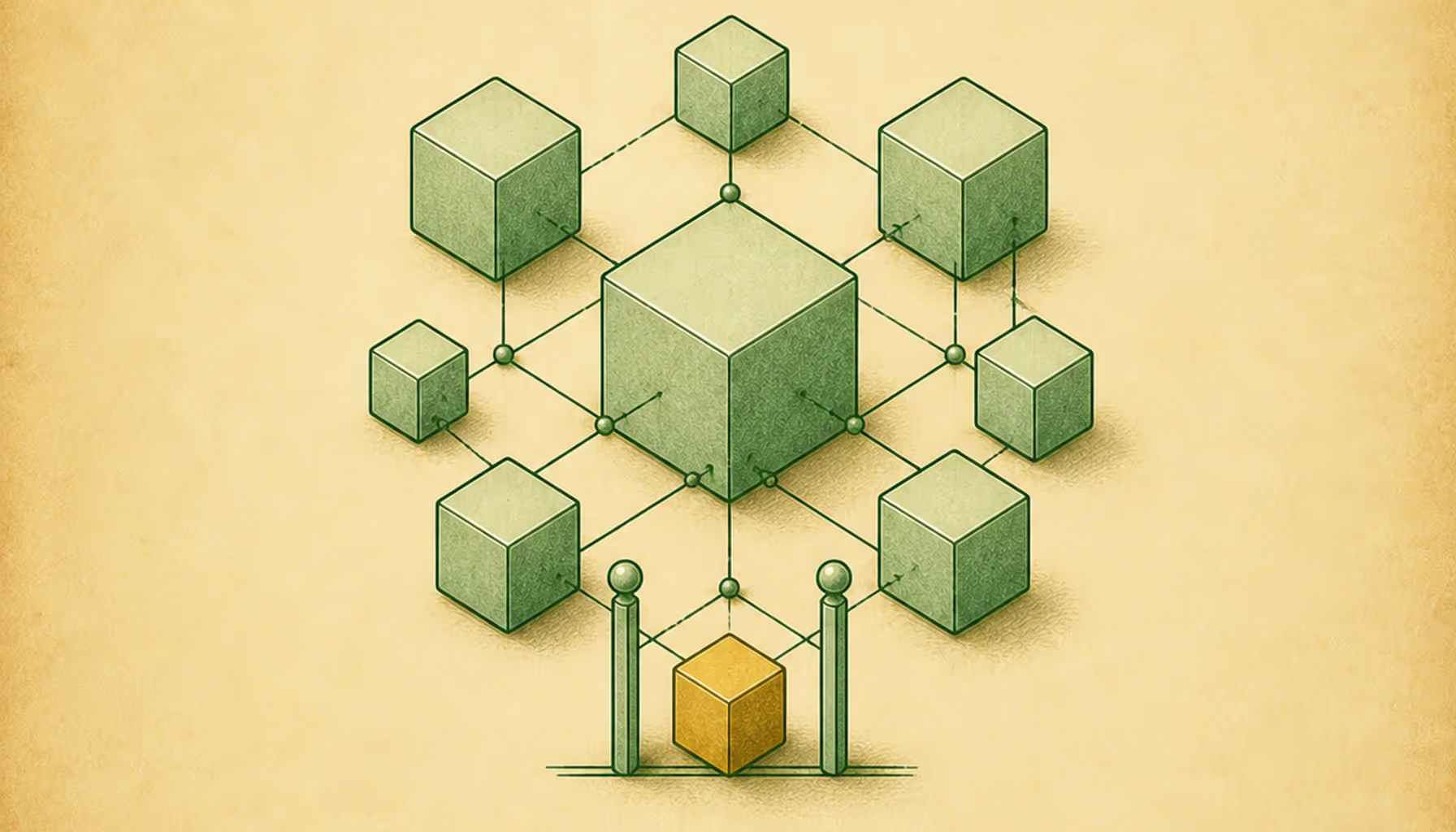
A beginner’s guide to Bitcoin: how the network and asset relate, how keys and transactions work, what nodes and miners do, and risks to understand.
Direct answer
Bitcoin is a digital monetary network with public rules that participants can verify; bitcoin is the unit transferred when the required spending conditions are met.
Bitcoin combines a public transaction ledger with rules that participants can independently verify. The network began operating in 2009. It has a supply rule that limits total issuance to below 21 million bitcoin.[2]
What is Bitcoin?
Bitcoin is a digital monetary network with public rules that participants can verify. The network began operating in 2009 and has a supply rule that limits total issuance to below 21 million bitcoin.[2]
Is Bitcoin a network or an asset?
Bitcoin refers to the network and protocol. bitcoin refers to the units recorded under that system’s rules. A bitcoin can be divided into 100 million satoshis.
How do Bitcoin keys and wallets work?
A private key can authorise spending when the relevant conditions are met. A wallet manages keys, addresses and related information; it does not store bitcoin in the way a physical wallet holds cash.[6]
Do not share a private key or recovery phrase. Key control does not by itself settle every legal ownership question. What is a Bitcoin wallet? explains custody basics.
How do Bitcoin transactions, fees and confirmations work?
A Bitcoin transaction spends existing outputs and creates new outputs. A sender authorises it with the required key material, and the network checks whether it follows the rules before a miner can include it in a block.[3]
Transactions can include fees and may be unconfirmed after broadcast. Further blocks add confirmations; confirmation is a risk-management concept, not an absolute guarantee at a fixed count. Read How to send and receive bitcoin safely for practical transfer safety.
What do Bitcoin nodes do?
Full nodes independently validate transactions and blocks against Bitcoin’s consensus rules. Each node accepts or rejects data according to the rules it runs; nodes do not decide the rules by counting users.[7]
What do Bitcoin miners do?
Miners assemble candidate blocks and use proof of work to compete to add a valid block. They cannot validly create arbitrary bitcoin or spend bitcoin controlled by someone else’s keys, because nodes still validate the rules.
New bitcoin is issued through the block subsidy, which is reduced at 210,000-block intervals. Read How many bitcoins exist? for supply and Bitcoin halving explained for the schedule.
What risks should a beginner understand?
Bitcoin can be volatile. Confirmed transactions can be difficult or impossible to reverse, and loss of private keys or recovery information can prevent access. Fraud, malware, operational mistakes and third-party service failures can also cause loss.
This article is a starting point, not financial, legal or tax advice. Read Bitcoin phishing before acting on an unexpected message.
Frequently asked questions
Is bitcoin stored in a wallet?
No. Bitcoin is recorded on the ledger; a wallet manages keys, addresses and other information used to satisfy spending conditions. Bitcoin Developer Guide: Wallets
Can Bitcoin transactions be reversed?
A confirmed transaction can be difficult or impossible to reverse. The appropriate confirmation policy depends on the payment context and risk. Bitcoin Developer Guide: Transactions
Related reading
Everything about Secured Lending
Download the brochure and learn more about our offering.
Blockrise needs the contact information you provide to us to contact you about our products and services. You may unsubscribe from these communications at any time. For information on how to unsubscribe, as well as our privacy practices and commitment to protecting your privacy, please review our Privacy Policy.